
Introduction As Thanksgiving approaches, many homeowners find themselves balancing the joys of the season with…
When Should You Apply for a Mortgage?
Apply for a mortgage before you start seriously shopping for a home, not after you find one. Getting your documents and application looked at first is the difference between making a strong, ready offer and scrambling under pressure while the house goes to someone who was already prepared.
Reviewed by Glenn Groves, Mortgage Broker, NMLS #1124642. GTG Financial, Inc. NMLS #1595076. Serving Santa Rosa and Sonoma County, CA.
TL;DR: WHAT’S IN THIS POST
- Apply before you shop, not after you find a house
- Doing it backwards means rushing and losing offers
- The application (the 1003) is just info you already know
- Applying commits you to nothing
- Large deposits get paper-trailed early, thanks to the Patriot Act
Why you apply before you shop
The biggest mistake we see people make in the entire mortgage process, besides quitting your job, is waiting to get all of their documentation looked at. People want to find the house, then apply for the loan, which is completely backwards. Now everything is under pressure and being rushed, while the person you are going to lose that offer to was already pre-approved and ready to go.
Applying first is really about making sure there are no red flags or snags. And if something does come up, it usually is not a red flag with you personally. So many people assume they will be totally fine and do not realize that, say, a second job with variable hours needs to show continuance before it can count.
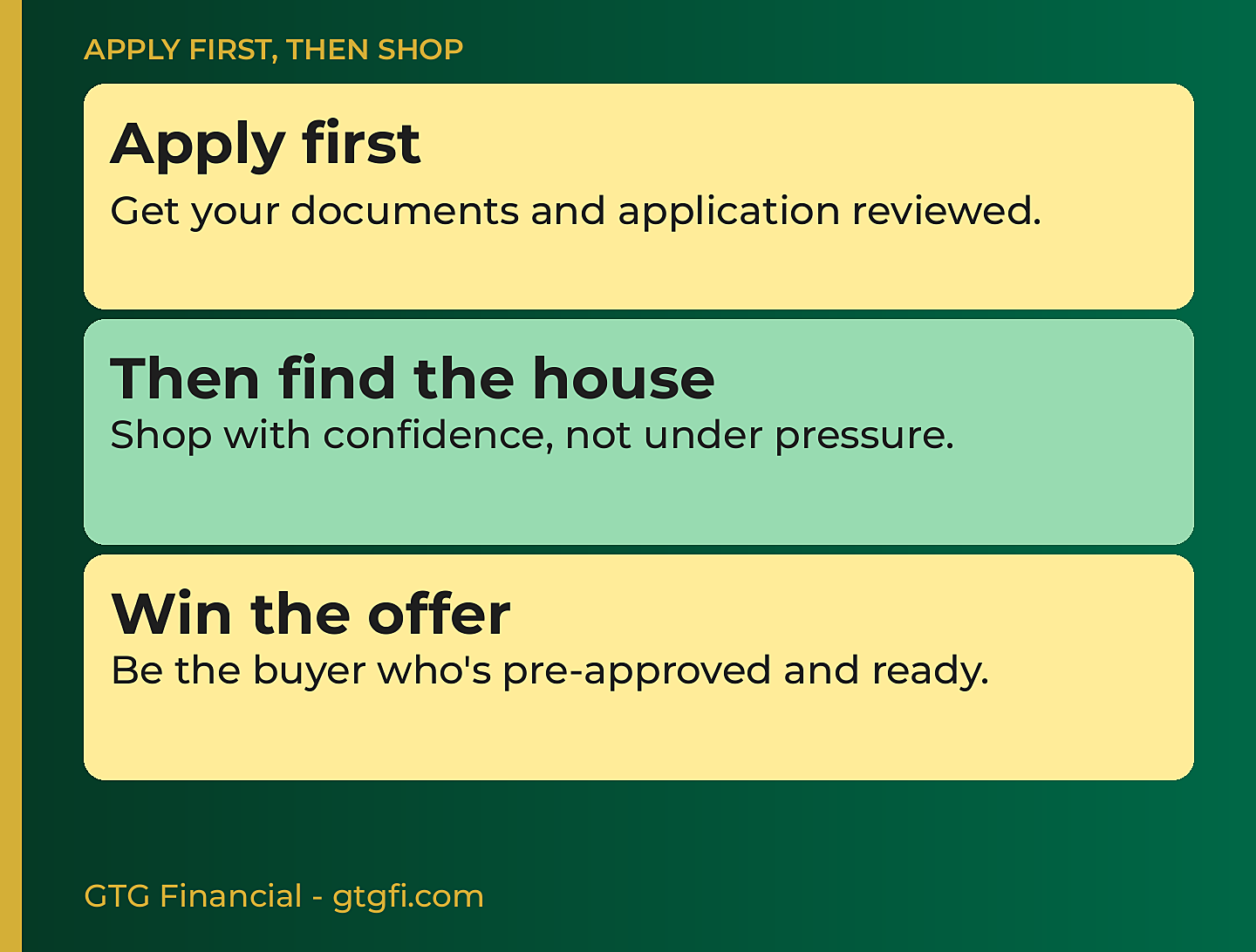
Here is how the two approaches actually play out:
| Apply first, then shop | Find the house, then apply | |
|---|---|---|
| Your position when you offer | Pre-approved and ready | Unverified and hoping |
| Pressure level | Calm, everything reviewed | Rushed, everything at once |
| Red flags or snags | Found and solved early | Surface at the worst time |
| Who wins the house | You | The buyer who applied first |
“It’s not a red flag with you. It’s mortgage guidelines.”
Glenn Groves, GTG Financial
The application itself: the 1003
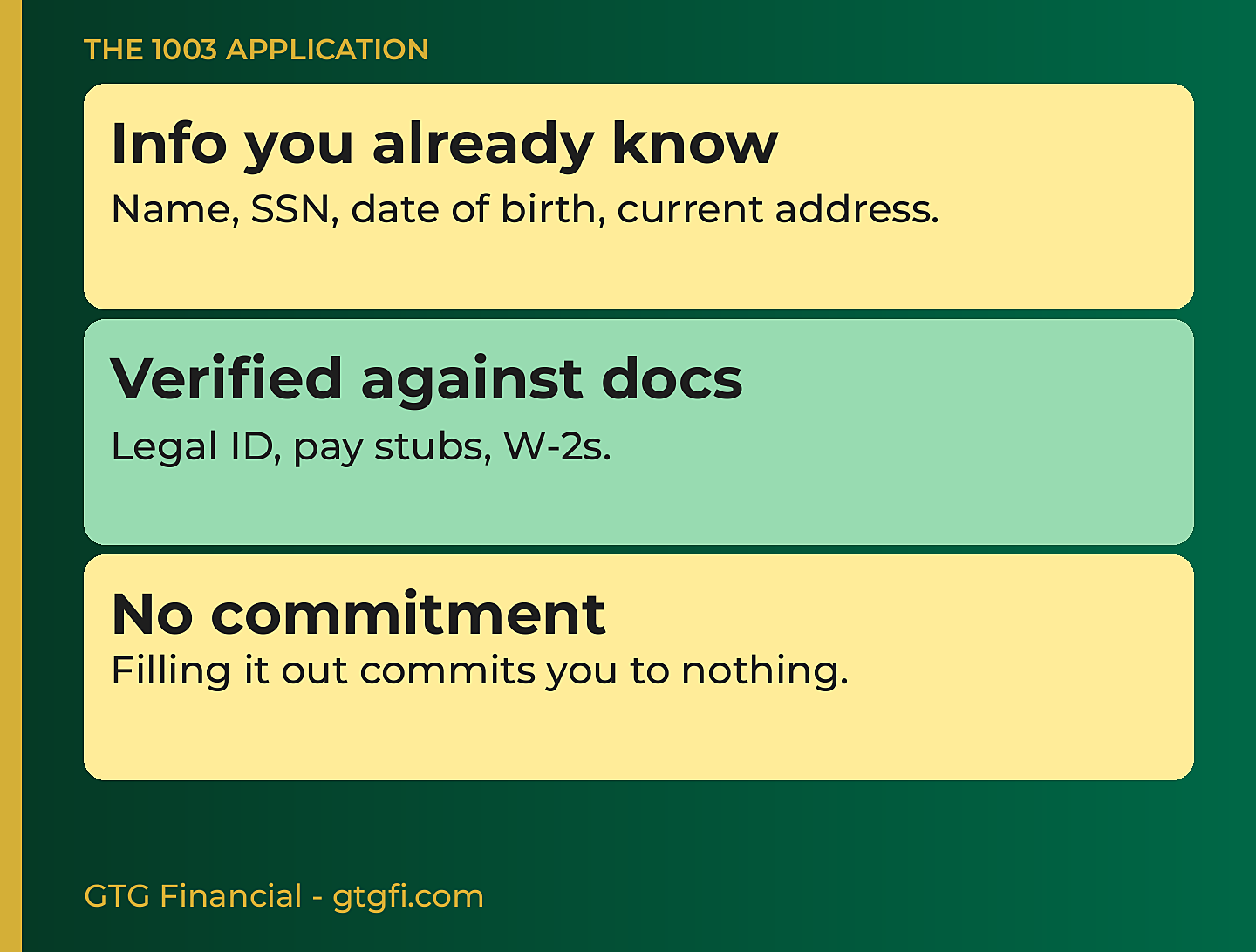
Your actual application is called the 1003. Do not be intimidated by it. You are not committing to anything by filling it out, and it is all information you know like the back of your hand: full name, social, date of birth, and your current address. We then verify that against the documentation you provide, like a legal issued ID, pay stubs, and W-2s.
This is where the discovery call really pays off. Are you self-employed, a W-2 employee, have you moved around, do you have multiple jobs? Once we know, we can tell you exactly what we need to see, based on lending guidelines, to get you approved.
“We’re simply getting the puzzle pieces on the board.”
Glenn Groves, GTG Financial
Why we ask about large deposits
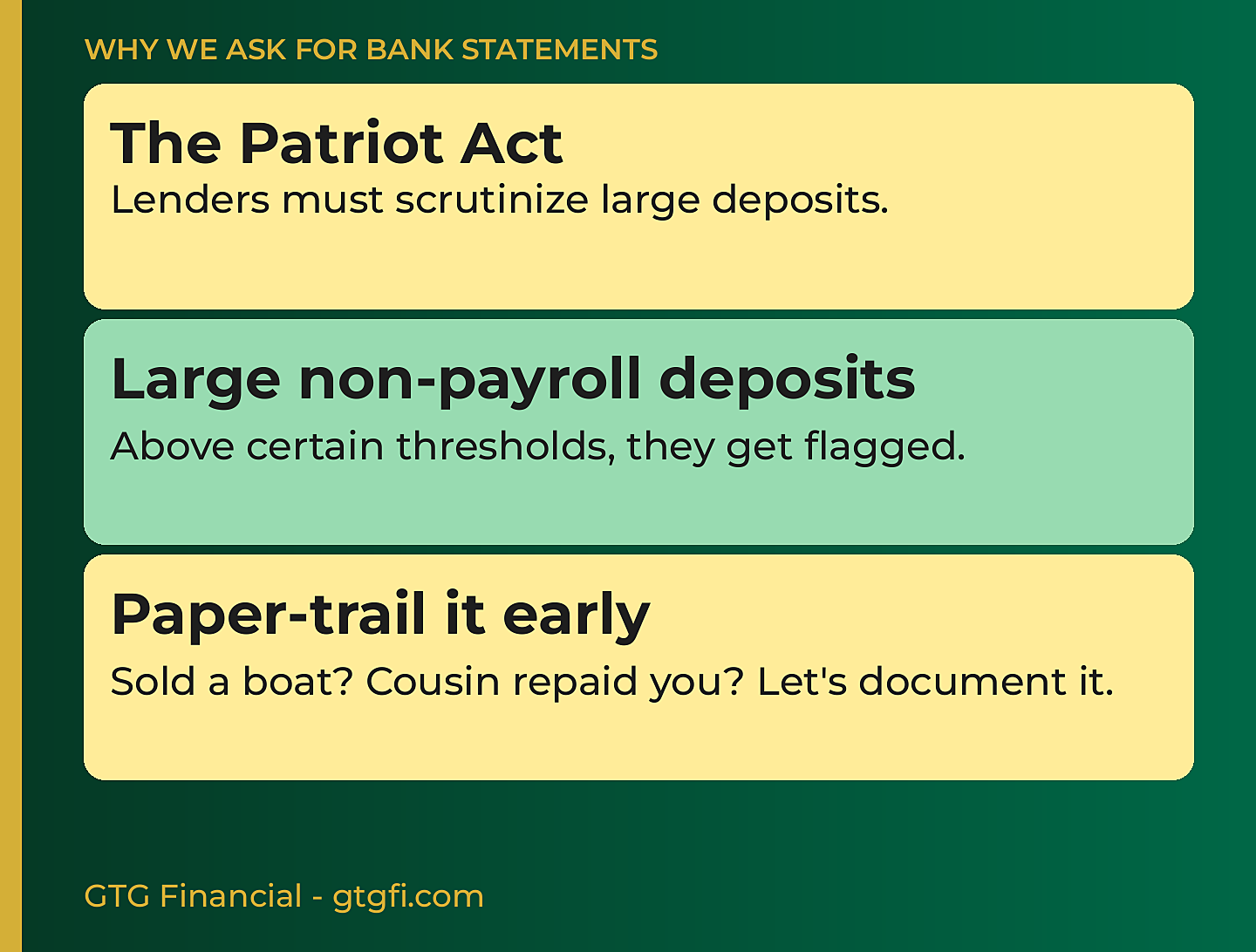
Sometimes people ask why we need to see a few months of bank statements. This comes back to the Patriot Act. Lenders are required to scrutinize large deposits that are not payroll, and there are certain thresholds that trigger a closer look.
That is exactly why we want to look up front and talk about what those deposits are, because a lot of the time they can be paper-trailed. Maybe you sold a boat, or your cousin finally paid you back. Let us figure that out now, so we do not have to disallow money you were planning to use later.
Where the application fits in your loan roadmap
The application is Stage 2 of the loan roadmap, right after your discovery call and before qualification and pre-approval. See the full GTG loan roadmap to know every step before it happens.
Whether you are buying in Santa Rosa, Sonoma County, or anywhere in California, applying first is how you shop with confidence. When you are ready, you can get pre-qualified online. For a neutral overview, the CFPB’s guide to preparing to shop is a helpful resource.
Ready to get ahead of it? Start your application with Glenn or request a quote.
Frequently asked questions
Should I apply for a mortgage before I find a house?
Yes. Applying first gets your documents reviewed and any snags handled early, so you can make a strong, ready offer instead of scrambling and losing the house to a buyer who was already prepared.
What is the 1003?
The 1003 is the standard mortgage application. It is information you already know, like your name, social, date of birth, and address, which we verify against documents such as your ID, pay stubs, and W-2s.
Does applying for a mortgage commit me to anything?
No. Filling out the application commits you to nothing. Because we are protective about running credit until you are ready, we look at everything else first and simply get the puzzle pieces on the board.
Why do lenders want to see my bank statements?
It comes back to the Patriot Act. Lenders must scrutinize large deposits that are not payroll. We review them up front so any large deposit can be paper-trailed, and we do not have to disallow money you were planning to use.
Glenn Groves NMLS #1124642 / GTG Financial, Inc. NMLS #1595076 / Equal Housing Opportunity / Not a commitment to lend / CA DRE #02029711. Loan terms and pricing vary by borrower and situation. nmlsconsumeraccess.org

Related Posts