Introduction As Thanksgiving approaches, many homeowners find themselves balancing the joys of the season with…
Signing, Funding, and Recording: When Do You Actually Own the House?
Signing, funding, and recording are three different events, and you do not own the home until the county records it. You sign the final loan documents with a notary, the lender reviews them and funds the loan, and then escrow sends your paperwork to the county recorder. Only that last step makes you the owner. Here is how the sequence actually runs in California.
Reviewed by Glenn Groves, Mortgage Broker, NMLS #1124642. GTG Financial, Inc. NMLS #1595076. Serving Santa Rosa and Sonoma County, CA.
TL;DR: WHAT’S IN THIS POST
- Signing, funding and recording are three separate events
- You sign final documents with a notary
- The lender checks the docs, then funds the loan
- In California you rarely sign and get keys the same day
- Recording at the county is what makes you the owner
Three different things, in order
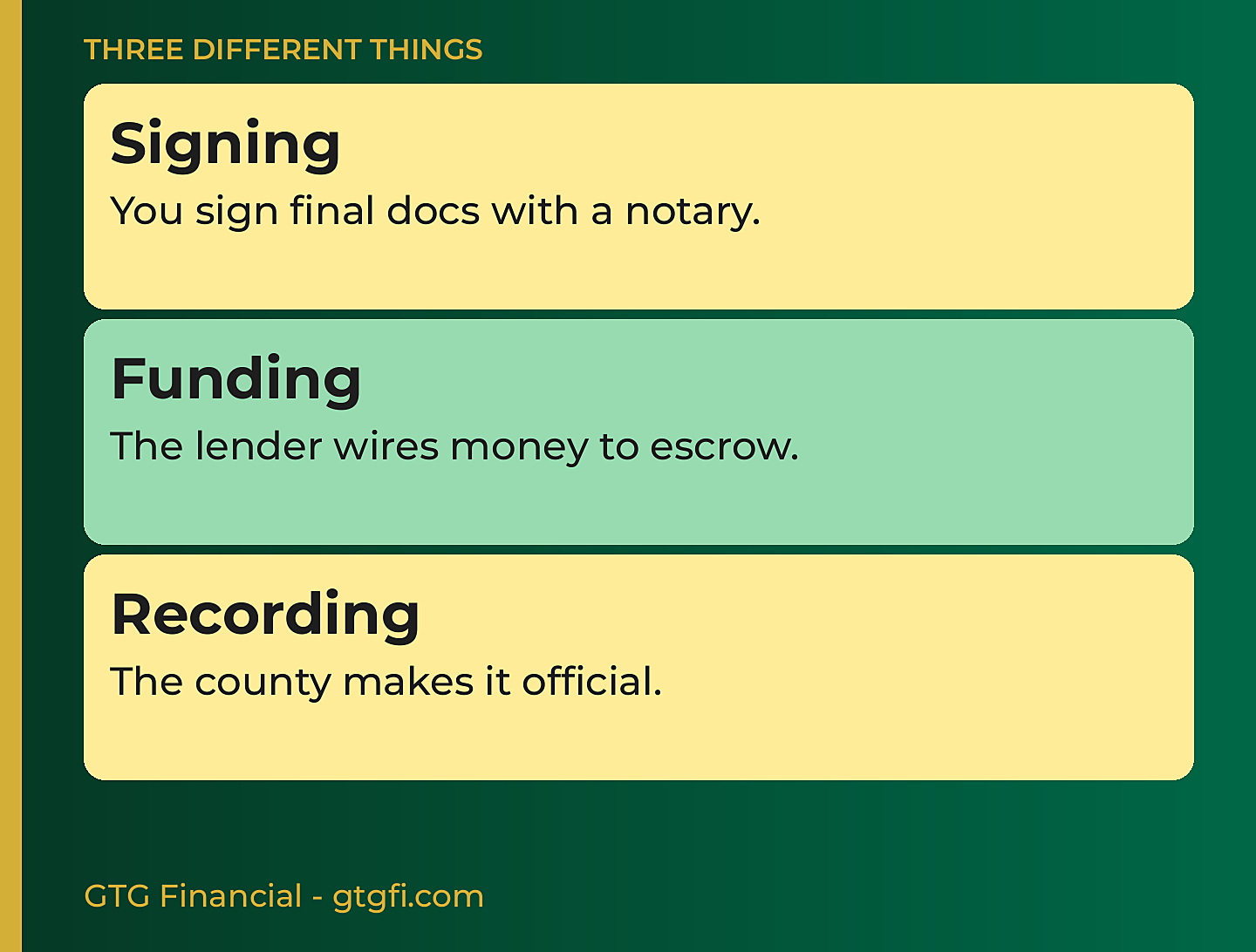 Signing, funding, recording. Three different things. That distinction matters more than almost anything else at the end of a transaction, because most of the confusion on closing day comes from treating them as one event.
You do not own the house until it is on record with the county. Before that can happen, you have to sign the final loan documents with a notary.
“Signing, funding, recording. Three different things. You don’t own the house until it’s on record with the county.”
Glenn Groves, GTG Financial
What happens between signing and funding
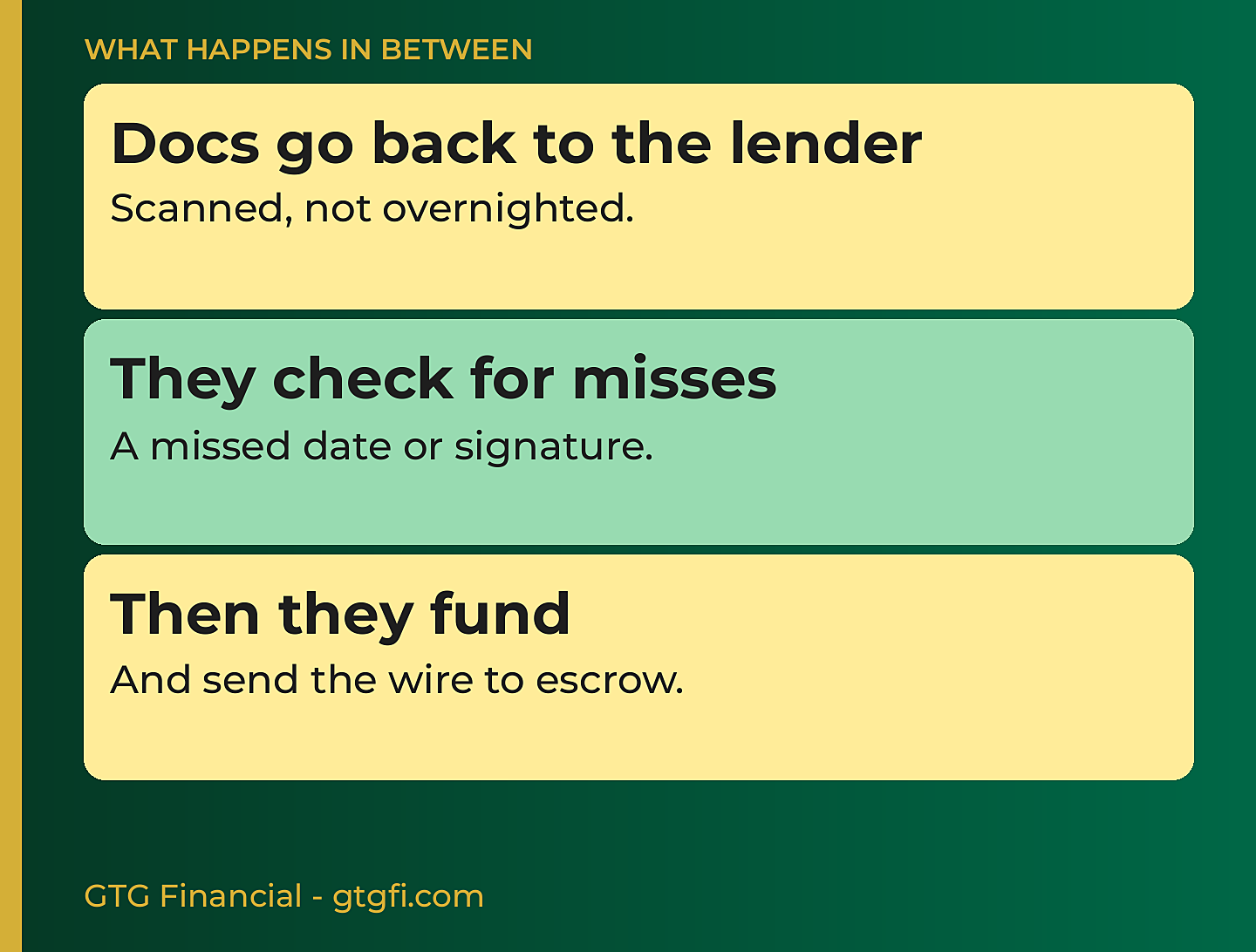 Once the signed loan documents are sent back to the lender, the lender looks them over and makes sure nothing got missed. It is usually something small: people forget to date something, or there is a signature missed.
When everything checks out, they fund the loan and send the wire to the escrow company. That is the funding step, and it is separate from both the signing that came before it and the recording that follows.
| Step | What happens | Are you the owner? |
|---|---|---|
| Signing | You sign final loan docs with a notary | Not yet |
| Lender review | Docs checked for a missed date or signature | Not yet |
| Funding | The lender wires the money to escrow | Not yet |
| Recording | The county records the deed of trust | Yes |
Why you rarely get keys the same day
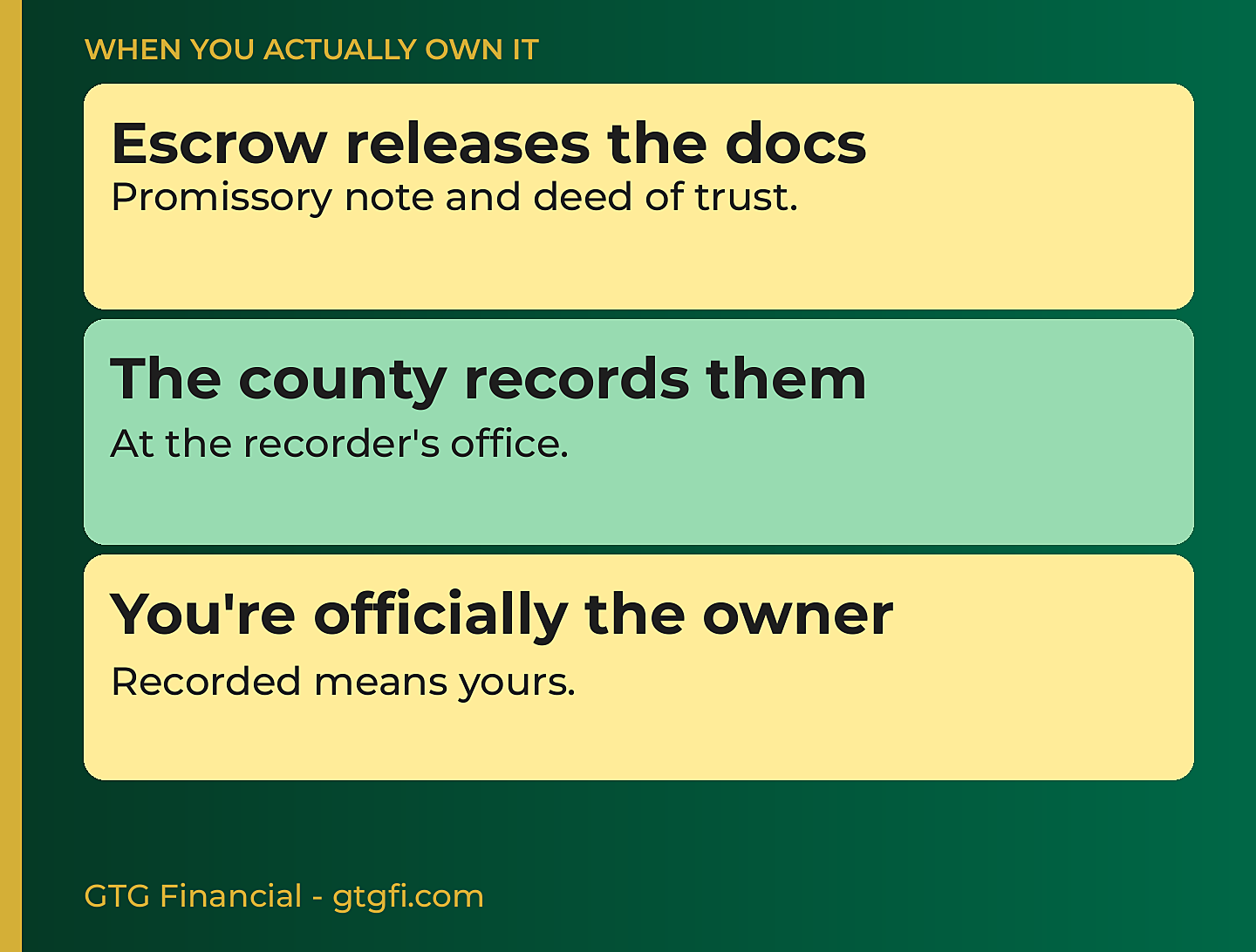 As much as we would like to have it be very easy to sign and hand you the keys, that is not how it works here in California. The last stretch has its own sequence and it takes time to run.
You sign the final loan docs. The lender funds the loan. The escrow company releases your promissory note and your deed of trust, which secures that note to the property, to your local county’s recorder’s office. They record it. You are now officially the owner.
“They record it. You’re now officially the owner.”
Glenn Groves, GTG Financial
Where signing fits in your loan roadmap
Signing, funding and recording is Stage 11 of the loan roadmap, right after clear to close and just before your loan moves into servicing. See the full GTG loan roadmap to know every step before it happens.
Whether you are buying in Santa Rosa, Sonoma County, or anywhere in California, understanding this sequence is what keeps signing day calm instead of confusing. When you are ready, you can get pre-qualified online. For a neutral overview, the CFPB’s closing guidance is a helpful resource.
Want a lender who explains the last day before you get there? Talk with Glenn or request a quote.
Frequently asked questions
What is the difference between signing, funding and recording?
Signing is when you sign the final loan documents with a notary. Funding is when the lender reviews those documents and wires the money to escrow. Recording is when the county records your deed of trust, and that is the step that makes you the owner.
Do you get the keys the day you sign?
Usually not in California. After you sign, the lender still has to review the documents and fund the loan, and escrow has to get your paperwork recorded at the county. Those steps take time.
When do you officially own the house?
When the county records your promissory note and deed of trust. Until recording happens, signing and even funding do not make you the owner.
What can delay funding after signing?
Most often it is something small in the paperwork, like a missed date or a missing signature, which the lender catches on review. Wire timing can also be affected by banking schedules.
Glenn Groves NMLS #1124642 / GTG Financial, Inc. NMLS #1595076 / Equal Housing Opportunity / Not a commitment to lend / CA DRE #02029711. Loan terms and pricing vary by borrower and situation. nmlsconsumeraccess.org

Related Posts