Introduction As Thanksgiving approaches, many homeowners find themselves balancing the joys of the season with…
Where Does Your Earnest Money Actually Go?
Your earnest money goes into a neutral escrow account, not to the seller. It is held there, protected by your contingencies, and it counts toward your down payment and closing costs, so it is not an extra cost on top of your cash to close. Here is exactly what happens to that money once you are in contract.
Reviewed by Glenn Groves, Mortgage Broker, NMLS #1124642. GTG Financial, Inc. NMLS #1595076. Serving Santa Rosa and Sonoma County, CA.
TL;DR: WHAT’S IN THIS POST
- You have 3 business days to deposit once in contract
- It’s usually 1 to 3% of the purchase price
- It goes to escrow, a neutral third party
- Your contingencies protect it
- It counts toward your cash to close, not on top of it
What happens right after you’re in contract
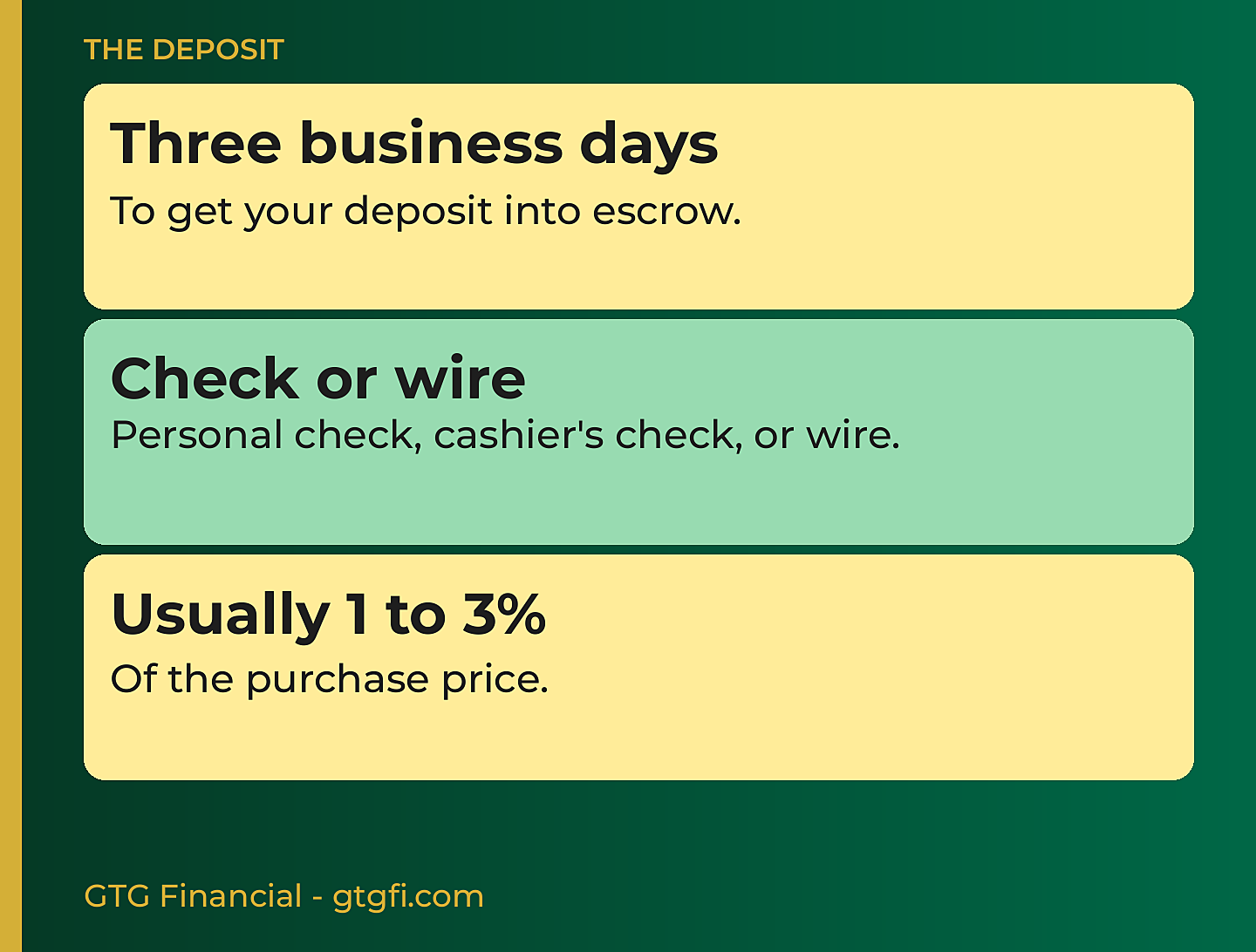
Getting into contract is a huge hurdle, and it surprises a lot of buyers how fast the next step comes. This is why we like to cover it up front: you have three business days to get an earnest money deposit into escrow. It can be brought in a few different ways, a personal check, a cashier’s check, or a wire. Whichever you use, the clock starts once your offer is accepted.
How much? Usually it is 1 to 3% of the purchase price. It is a good faith deposit that tells the seller you are serious, and it kicks off the transaction.
Where the money actually goes
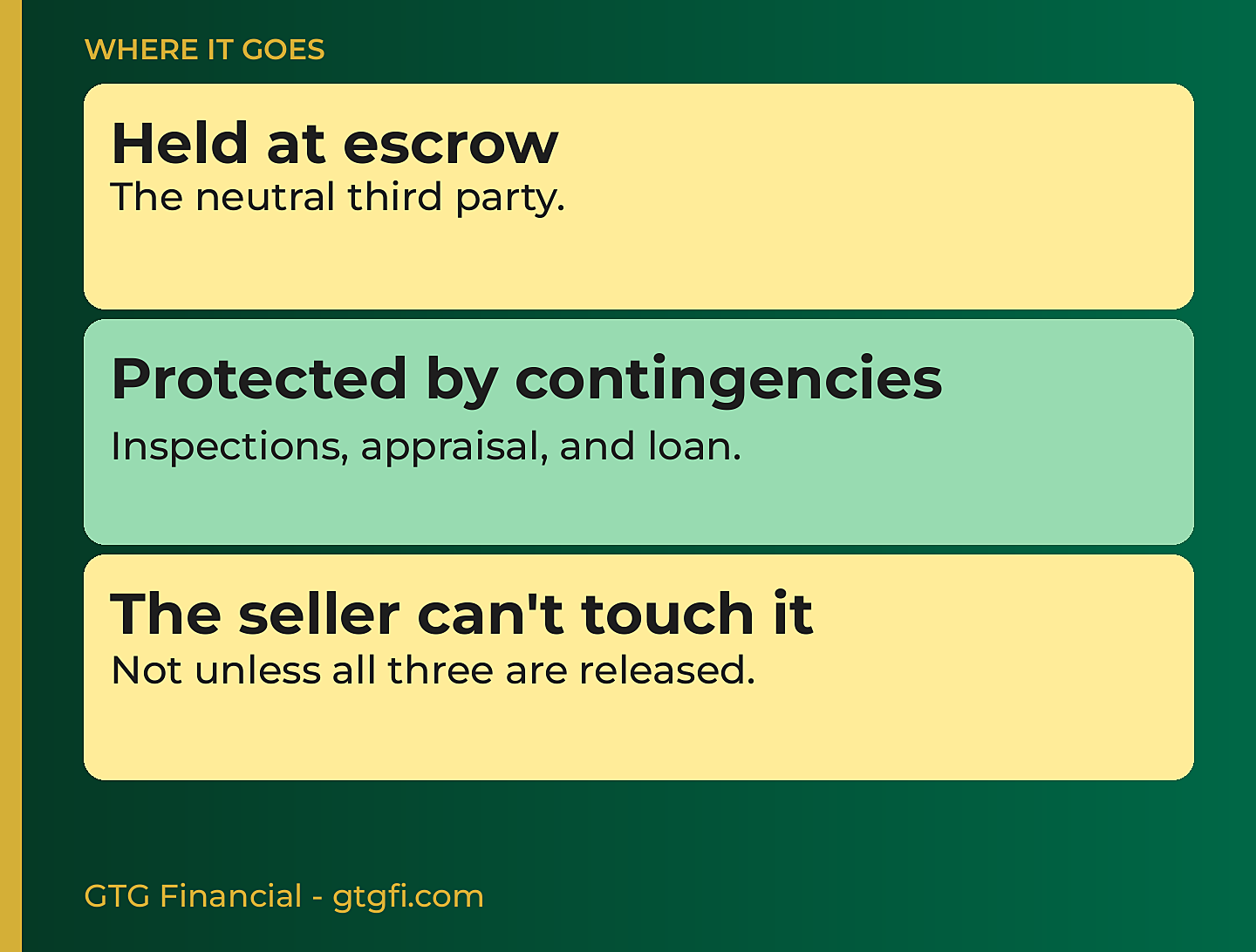
Your earnest money does not go to the seller. It gets deposited at escrow, which is the neutral third party in your transaction. Once it is there, that deposit is protected by the three layers of contingencies: your inspections, the appraisal, and the loan.
The seller has no right to that deposit unless all three of those contingencies have been released, which means you have to sign forms to release each one, and then you back out of the deal. In other words, your protections have to be gone before that money is ever at risk.
“That deposit is protected by the three layers of contingencies: inspections, the appraisal, and the loan.”
Glenn Groves, GTG Financial
| Question | The answer |
|---|---|
| Who holds it? | Escrow, a neutral third party |
| How much? | Usually 1 to 3% of the purchase price |
| What protects it? | Inspections, appraisal, and loan contingencies |
| When is it at risk? | Only after you release all three and then back out |
Why it’s not an extra cost
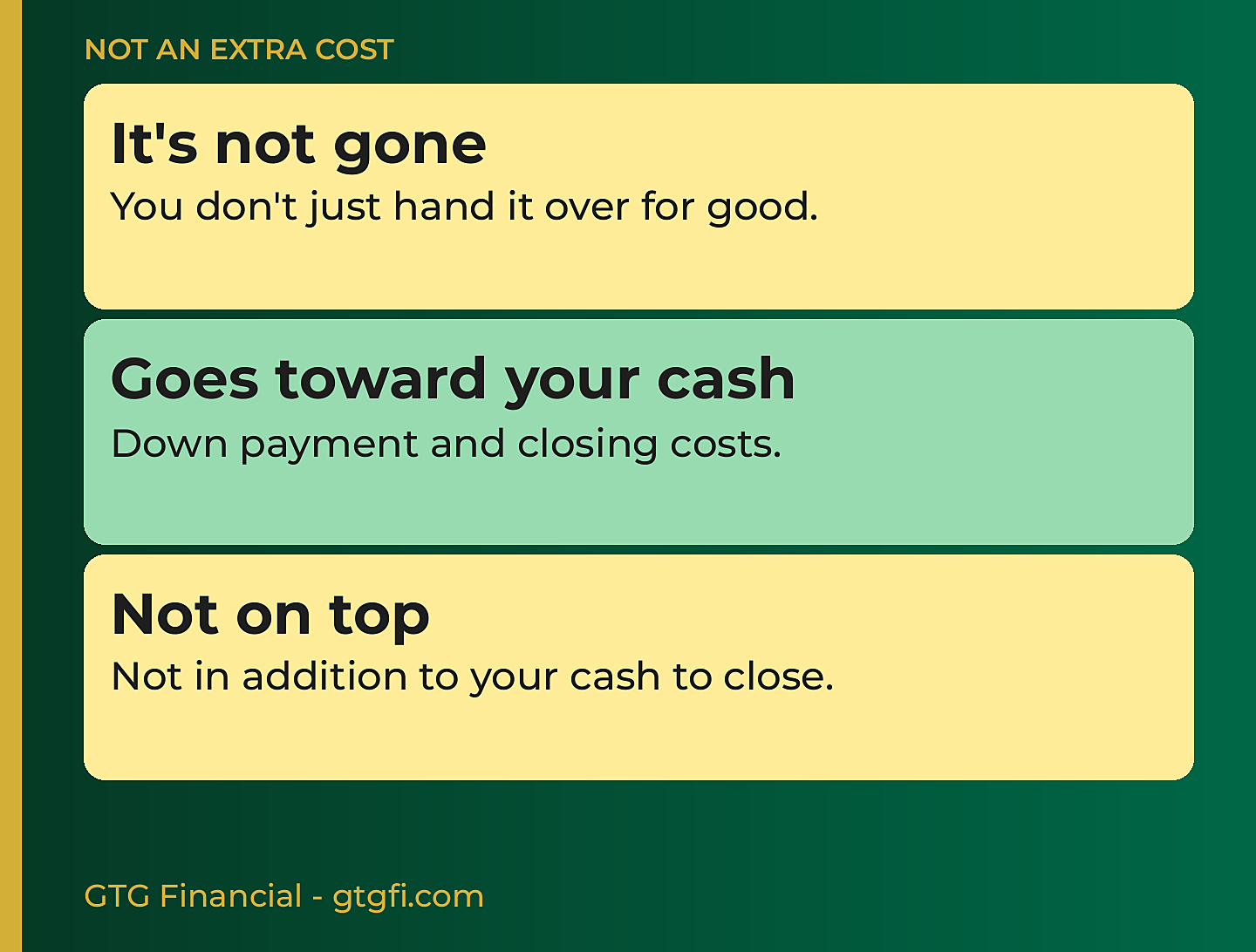
Here is the part that puts people at ease. This is not something that goes in and then you never see it again, even if the house turns out to be a pig with lipstick on it. Your earnest money goes against your down payment and your closing costs.
That means it is not in addition to your final cash to close number. It is part of it. You are essentially paying a piece of what you already owe at closing, earlier, and into a protected account.
“This also goes against the down payment and closing costs. This is not in addition to that final cash to close number.”
Glenn Groves, GTG Financial
Where earnest money fits in your loan roadmap
Your earnest money deposit comes at Stage 5 of the loan roadmap, right after you are pre-approved and get into contract. Want more on the deposit itself and when you could actually lose it? See our full guide to the earnest money deposit, and walk the entire GTG loan roadmap to know every step before it happens.
Whether you are buying in Santa Rosa, Sonoma County, or anywhere in California, understanding where your money goes takes a lot of the stress out of going into contract. When you are ready, you can get pre-qualified online. For a neutral overview, the CFPB’s owning a home guide is a helpful resource.
Ready to make a strong, protected offer? Talk with Glenn or request a quote.
Frequently asked questions
Where does earnest money go?
It goes into a neutral escrow account, not to the seller. Escrow holds it while your contingencies are in place, and it is applied toward your down payment and closing costs at the end.
How much earnest money do I need?
Usually 1 to 3% of the purchase price, deposited within three business days of going into contract. It can be a personal check, a cashier’s check, or a wire.
Is earnest money an extra cost?
No. It goes against your down payment and closing costs, so it is part of your cash to close, not an additional charge on top of it.
Can the seller keep my earnest money?
Only if you release all three contingencies, inspections, appraisal, and loan, and then back out of the deal. While those protections are in place, the seller has no right to your deposit.
Glenn Groves NMLS #1124642 / GTG Financial, Inc. NMLS #1595076 / Equal Housing Opportunity / Not a commitment to lend / CA DRE #02029711. Loan terms and pricing vary by borrower and situation. nmlsconsumeraccess.org

Related Posts