
Embracing October’s Homebuying Season As the leaves turn and the air becomes crisp, October presents…
Real Estate Contingencies Explained
July 2026 | GTG Financial | Santa Rosa, CA
Real Estate Contingencies Explained: The Big Three and When to Waive Them
Real estate contingencies are safety nets written into your purchase contract that let you back out without losing your deposit. The big three are inspection, appraisal, and loan: is the house in the shape you thought, is it worth what you thought, and can you qualify for the financing. In California you typically have 17 days to clear each one.
Reviewed by Glenn Groves, Mortgage Broker, NMLS #1124642 · GTG Financial, Inc. NMLS #1595076 · Serving Sonoma, Marin, and the greater North Bay.
TL;DR: What’s in This Post
- What contingencies actually do, in plain English
- The big three: inspection, appraisal, and loan
- The 17-day standard and how buyers compete on it
- When waiving a contingency is smart, and when it’s a mistake
- What’s really at stake: your earnest money deposit
The lingo in real estate can be genuinely confusing for a first-time buyer, and contingencies are near the top of that list. They are one of the most powerful protections you have, and one of the easiest things to give away by accident in a competitive offer. Here is what they are and how to think about them.
What Contingencies Actually Do
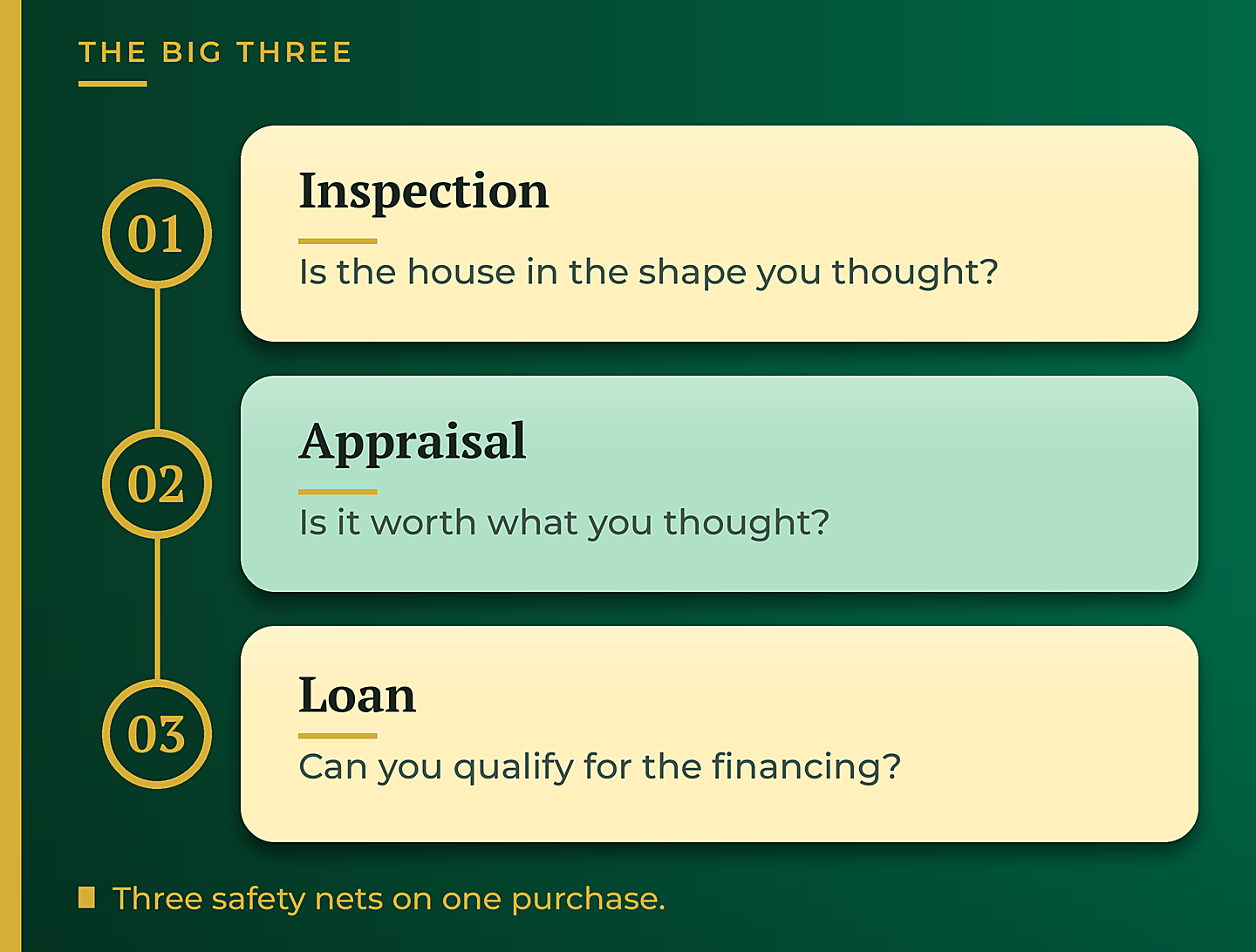
Contingencies are largely a California-specific way of doing things, and they are a total double edged sword. They exist to protect the buyer, and in that respect they work beautifully. The flip side is that they put real deadlines on everyone else in the transaction, which is why they need to be managed rather than ignored.
The big three are the inspection contingency, the appraisal contingency, and the loan contingency. In plain terms, each one answers a question: is the house in the shape you thought it was, is it worth what you thought it was, and can you actually qualify for the loan you applied for? While any of those is still active, you have a legitimate reason to walk away.
What’s Actually at Stake: Your Deposit
Contingencies matter because real money is riding on them. When you make an offer you put down an earnest money deposit, typically 1 to 3% of the offer price, into a neutral escrow account. On an $850,000 Sonoma County home, that is roughly $8,500 to $25,500 sitting in escrow.
That deposit is released step by step as you clear each contingency. Back out while one is still active and you are protected. Walk away after they are all released and the seller can legally keep it. So the contingencies are not paperwork, they are the thing standing between you and losing five figures.
The 17-Day Standard, and Competing On It

The standard timeline is usually 17 days to complete each of those contingencies, and they run concurrently rather than back to back. That is the default most contracts start from.
Agents often ask us whether they can shorten the appraisal and loan contingencies below 17 days to signal to a seller that the buyer is serious. Sometimes the answer is yes. If we have a straightforward buyer and appraisals are turning around quickly, we might say put ten and ten, let’s look aggressive, because we know what we are doing and we mean business. In a competitive situation that can win a deal. The key is that it is a decision made with your lender, not a guess.
When Waiving a Contingency Is a Mistake
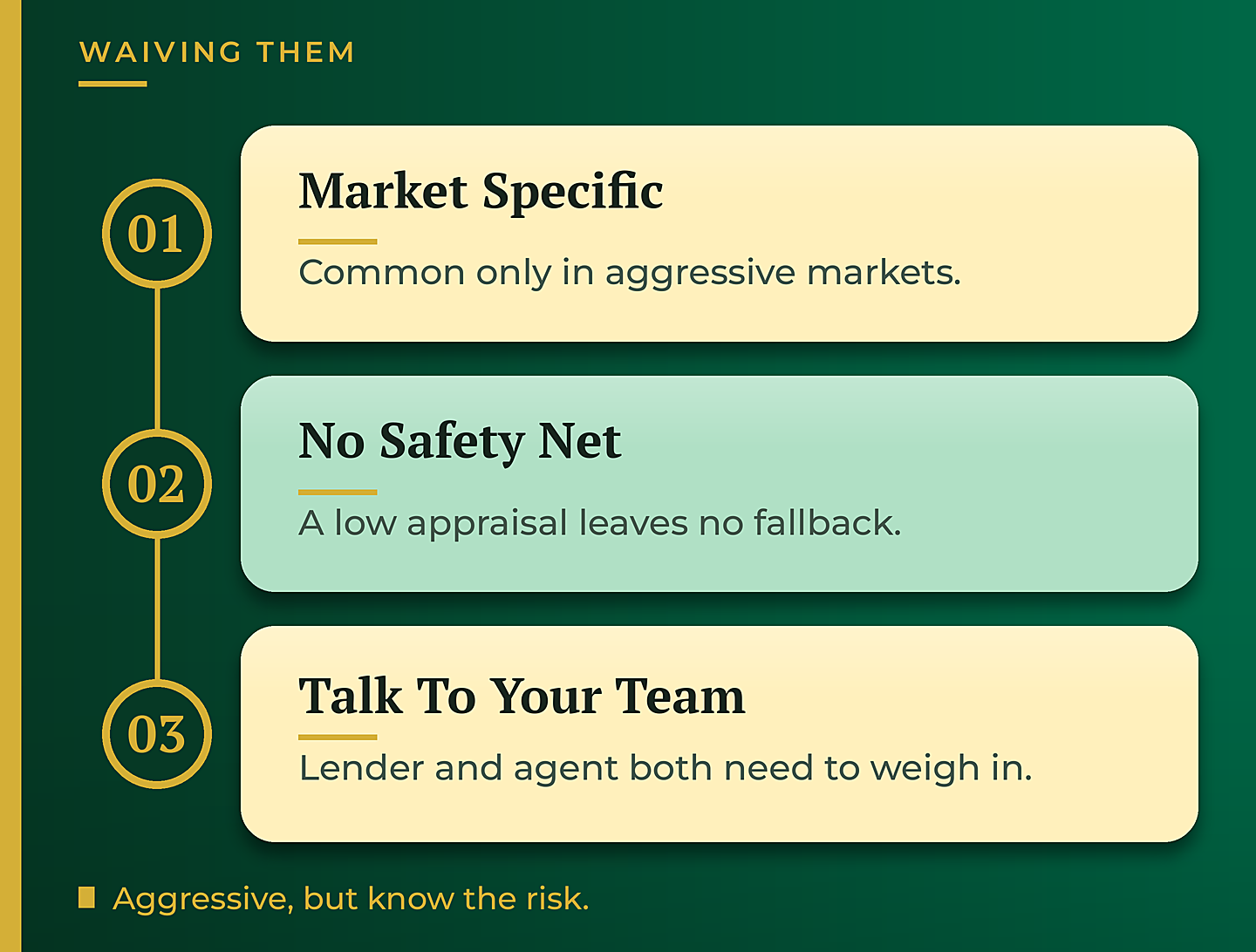
The number one reason people waive contingencies is market specific. Here in Sonoma County, it takes a really aggressive market before we see a lot of buyers waiving them. In hotter markets it is far more common, simply because an offer with contingencies may not get a call back.
But if the question is “shouldn’t I just waive them to look aggressive,” understand what you are doing: you are flying without a safety net. If that house under appraises, you have no contingency to fall back on and no leverage to renegotiate. So by all means consider it, but it is a discussion that needs to be had with your entire team. Your lender weighs in on the loan and appraisal, your agent on inspections, and everybody needs to be communicating if you are going to run an aggressive strategy like that.
Frequently Asked Questions
What are contingencies in real estate?
They are safety nets written into a purchase contract that let a buyer back out of the deal for specific reasons without losing their earnest money deposit. They exist primarily to protect the buyer.
What are the big three contingencies?
Inspection, appraisal, and loan. They answer three questions: is the house in the condition you expected, is it worth what you agreed to pay, and can you qualify for the financing you applied for.
How long do contingencies last in California?
The standard is typically 17 days for each one, and they run concurrently rather than one after another. Buyers sometimes shorten the appraisal and loan contingencies to make an offer more competitive.
Should I waive contingencies to win a bidding war?
It depends heavily on your market and your situation. Waiving means giving up your safety net, so if the home under appraises you have nothing to fall back on. It is a decision to make together with your lender and your agent, not on your own.
The Bigger Picture
Contingencies are not red tape. They are the structure that lets you commit real money to a purchase while still verifying that the house, the value, and the financing all hold up. Understanding them turns a scary part of the process into a manageable one.
If you are getting ready to write an offer and want to talk through which contingencies to keep, shorten, or in rare cases waive, reach out and we will map out a strategy that fits your situation and your market.
Glenn Groves
Mortgage Broker | GTG Financial | Santa Rosa, CA
NMLS #1124642 | gtgfi.com
This article is for educational purposes and is not legal or financial advice. Contingency types, timelines, and deposit terms vary by contract, market, and situation, and waiving a contingency carries real financial risk. Consult your real estate agent and a qualified professional about your specific transaction. Glenn Groves NMLS #1124642 | GTG Financial, Inc. NMLS #1595076 | CA DRE #02029711. Equal Housing Opportunity. Not a commitment to lend. nmls consumeraccess.org

Related Posts